

‘Dead Man’s Wire’ Surprised Me
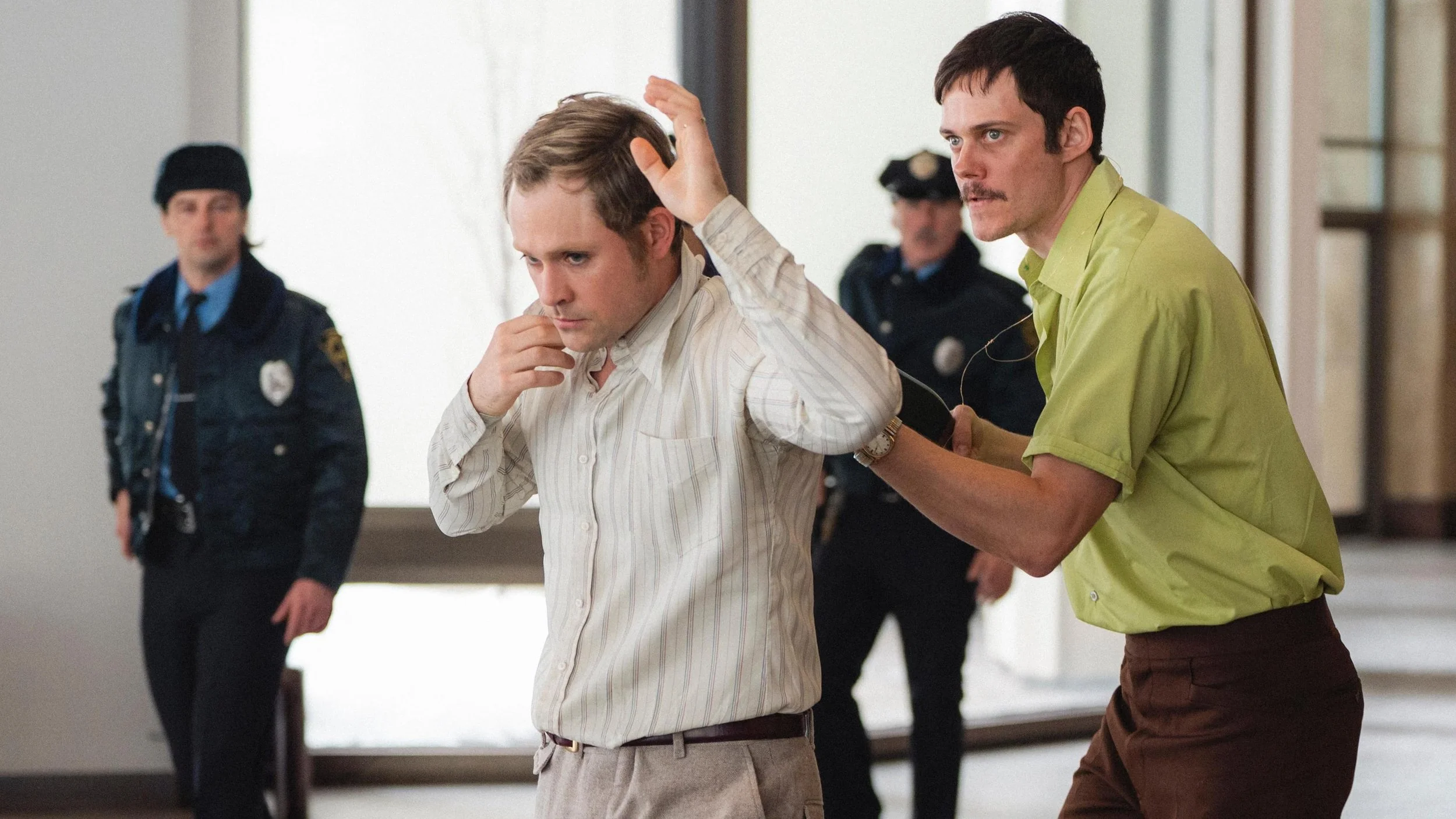
Dacre Montgomery and Bill Skarsgård in Dead Man’s Wire | Credit: Row K Entertainment
When Tony Kiritsis (Bill Skarsgård) holds the president of a mortgage company, Richard Hall (Dacre Montgomery), hostage, he starts a stand-off with the police and draws media attention.
Dead Man’s Wire is a slow burn and not what you might expect from a film centered around a hostage situation. There is so much tension throughout this film, but it’s not created through flashy action set pieces. Instead, it’s Bill Skarsgård’s performance that keeps the tension and stakes high.
Tony is such an interesting character because he is incredibly thorough in some respects, but also frequently makes silly mistakes. At times, he is likable and even charming, but other times, he’s manic, angry, and anxious. There’s an instability to Tony that makes this hostage situation incredibly precarious. You never know what is going to set him off or if some accident will happen that causes the trigger to be pulled. This constant questioning of what’s going to happen creates tension throughout the film.
Dacre Montgomery gives a powerful and subtle performance as Richard. He makes such an impact even though he doesn’t have a ton of dialogue. But even in these silent moments, he communicates so much. We feel each emotion that passes across his face as he contemplates his mortality, way of life, and how to get out of this situation.
Another stand-out is the always fantastic Colman Domingo, who plays Fred Temple, the charismatic radio host who ends up speaking with Tony at pivotal moments throughout the film. Domingo is so smooth in this film and exudes cool, which is what you want to see from a character like this. But there’s also a groundedness to his performance as he navigates a situation he is ill-equipped for.
Did I want more of Domingo in this film? Yes. But I really appreciated the quality moments that we did get of him.
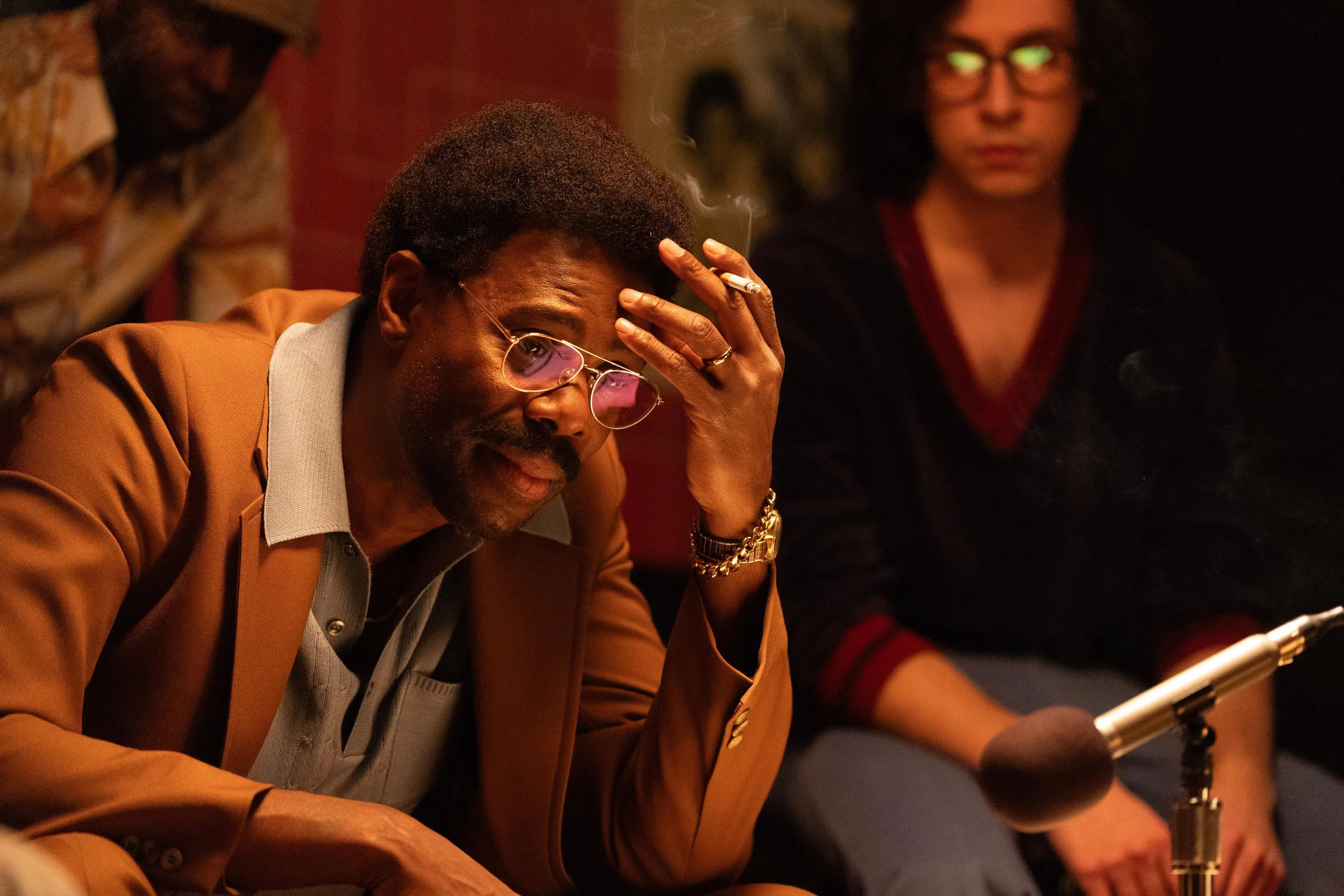
Colman Domingo in Dead Man’s Wire | Credit: Row K Entertainment
Even in the slower moments of Dead Man’s Wire, the tension remains. The film effectively shows us that just one wrong move from Tony, Richard, the police, or anyone else involved in this situation could lead to Richard’s death. Those moments when people are waiting for something to happen remain tense due to Tony’s frantic actions, the way the camera navigates his cramped apartment, and the confusion from those on the outside looking in.
With each new piece of information or new player introduced into the situation, the possibility of violence only increases. And the film uses these moments well to maintain a constant sense of unease.
Dead Man’s Wire is also strategic in how we are introduced to Tony and his plight. We learn little bits of information as the film goes on. It’s only by the end that we have a good picture of who this person is and what has driven him to this point, but for most of the film, he’s a bit of a mystery. That constant wondering about who this person is kept me wanting to know more.
The fact that this film is based on a true event makes things even stranger. It’s interesting watching how these characters wrestle with ideas like putting footage of Tony on air, given our technological capabilities today. It’s also interesting to put yourself in the shoes of the reporters and producers of the TV and radio stations at the time, and what the ethical obligations might be in an unusual situation like this.
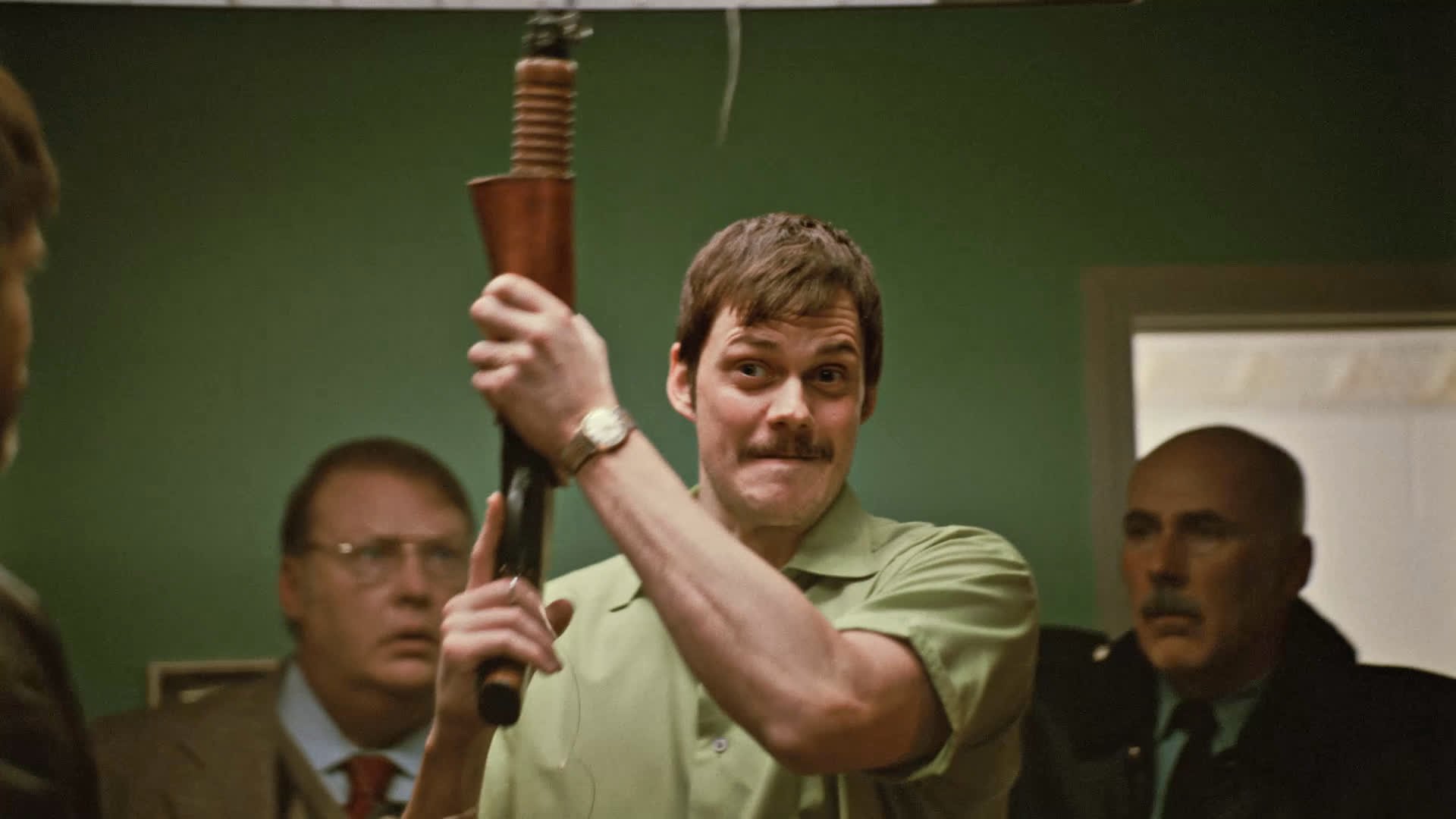
Bill Skarsgård in Dead Man’s Wire | Credit: Row K Entertainment
Dead Man’s Wire is a slow-burning film that consistently creates tension throughout. It boasts great performances, especially from the two leads who play well off of each other. The film drops you straight into the action, trusting that we will fill in the gaps as we go along. And there are some really interesting themes around capitalism, journalistic responsibility, and how to hold institutions responsible.
I had a great time with this, but your experience may vary. Still, this is a great one to experience in theaters, if you are able.