

Please Watch ‘Evil Does Not Exist’

Ryô Nishikawa in Evil Does Not Exist | Credit: Sideshow and Janus Films
When investors come to a small village with plans to build a glamping site, the residents push back.
This film is written and directed by Ryûsuke Hamaguchi, who also directed Drive My Car, which was one of my favorite films of 2022. When I saw Hamaguchi’s name, I was certain that I had to watch this film. And I’m so glad that I did!
Evil Does Not Exist is slow and contemplative. The film opens with a four-minute tracking shot looking up at the trees in the forest. Eiko Ishibashi’s score is both beautiful and haunting; it draws you in and makes you want to hear more as the sound washes over you. Those opening minutes are so uncomfortable, as the film forces you to sit with your thoughts and be present.
The rest of the film is filled with moments of quiet contemplation and riveting moments of life experienced by the residents of this small town. Takumi (Hitoshi Omika) spends his days doing odd jobs like cutting wood or collecting fresh water from the stream for a local restaurant. He is also perpetually late to picking up his eight-year-old daughter, Hana (Ryô Nishikawa), from school. But when they do spend time together, he teaches her about nature and the different types of trees and animals that live there.
Residents of Mizubiki Village have formed a close bond with one another. In a really sweet scene, a few different people come over to Takumi’s house and share a meal together. They support each other’s work and do their best to look out for one another and the earth that they are living on. I’ve never wanted to live in a remote village in the woods, but Evil Does Not Exist makes this life look pretty great.
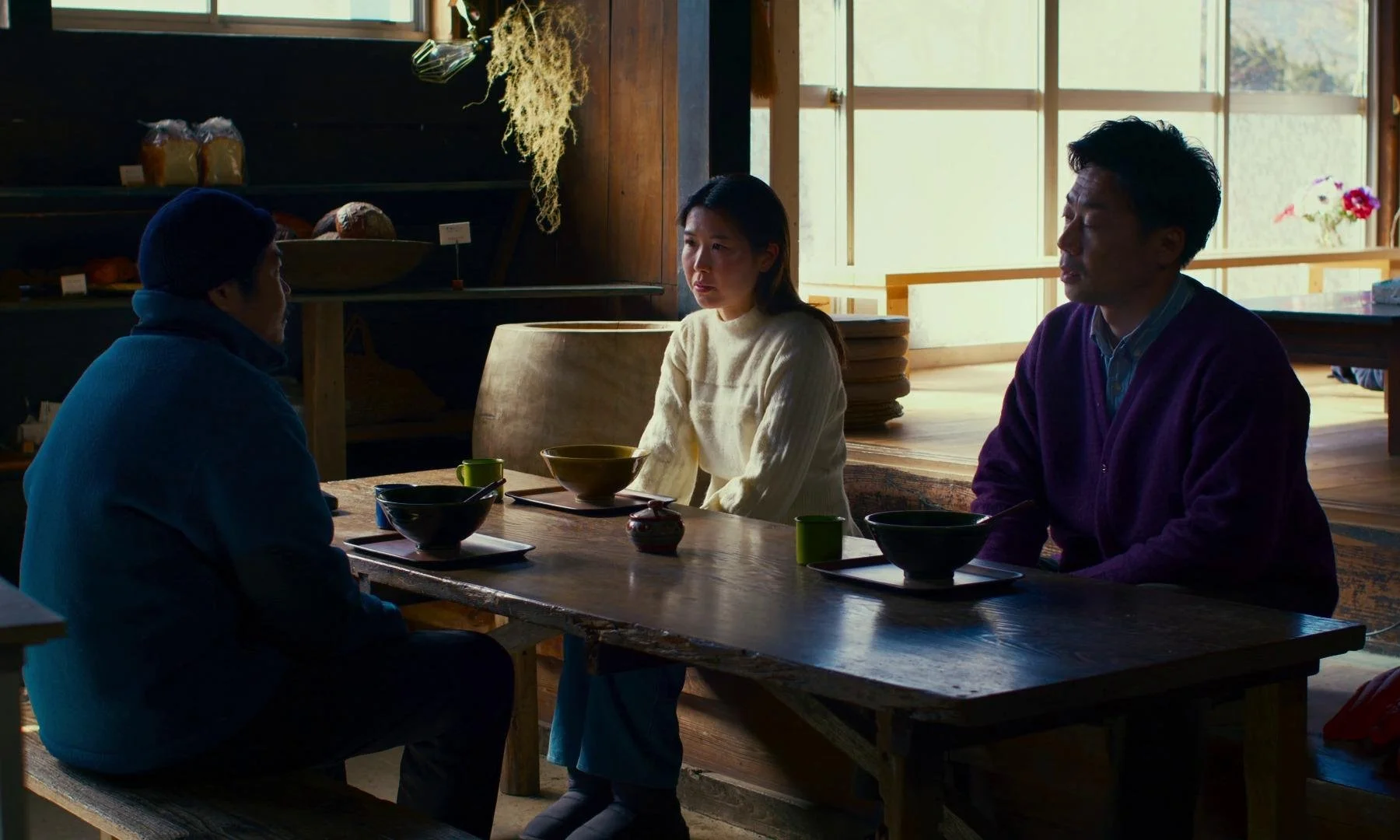
Hitoshi Omika, Ayaka Shibutani, and Ryûji Kosaka in Evil Does Not Exist | Credit: Sideshow and Janus Films
When the representatives from the glamping company come to hold a town hall meeting, we learn a great deal more about the residents and their connection to the land. In an incredibly tense scene, the residents dig into the glamping plans in far greater detail than the representatives were prepared for. They discuss septic tank capacity and placement, barbecues and the dangers of fires, staffing levels, and more.
There are so many memorable parts of this exchange, but the one that really stood out to me is when Suruga (Taijirô Tamura), the chief of the village, explains, “Upstream communities are expected to act responsibly… that is our duty.”
This line, in particular, hit me like a ton of bricks because of a recent Supreme Court decision here in the U.S. In June 2024, the Supreme Court blocked the EPA’s good neighbor plan that required upwind states to reduce air pollution that could harm states downwind.
In my country, big business almost always wins out against the environment, even if it means people suffer in the end. So, I was curious to see how Evil Does Not Exist would handle this topic. Japan is a much more courteous country than the U.S., so would people, even big business, be more respectful of this community’s resistance to their building project?
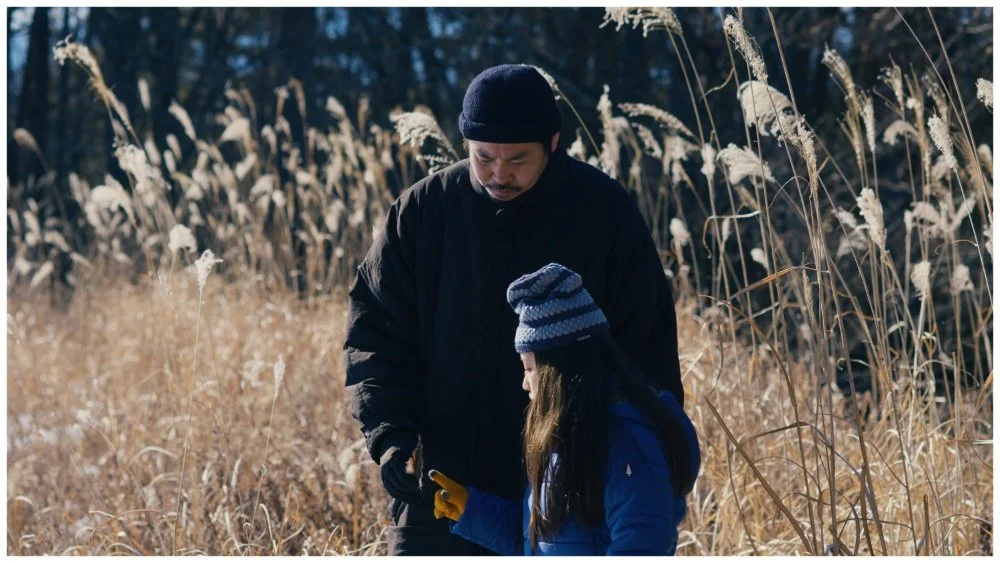
Hitoshi Omika and Ryô Nishikawa in Evil Does Not Exist | Credit: Sideshow and Janus Films
It’s really interesting to see how different outsiders react to the town hall meeting. The boss in charge of the project couldn’t make time to come to the meeting. He also takes the debriefing meeting with the team in the car on his way to another meeting. The whole scene is so spot on! He considers the town hall to be a roaring success, though anyone who was actually there would’ve thought otherwise.
After the meeting, Takahashi (Ryûji Kosaka) and Mayzumi (Ayaka Shibutani) are sent back to Mizubiki Village to try to talk Takumi into helping them with this glamping project. They help him with chores and visit the local restaurant.
Takahashi, who fields most of the questions during the meeting and gets physically upset with the residents, eventually finds himself enamored by this remote village. He is living his best life and determines that he wants to stay there. Takahashi is very eager to be involved, bringing his big personality to every interaction. Mayzumi empathizes with the residents and their desires. She seems to want to find a way to ensure that they are heard and respected, taking a much different tactic than her coworker.
Though these two aren’t the cartoonish businesspeople that we see in U.S. films that cover similar themes, they can be just as dangerous to the environment. Their ignorance can be harmful, as we see when Takumi tries to explain things about the land to them. Evil Does Not Exist reminds us that sometimes, over-eagerness can be just as damaging as maliciousness.
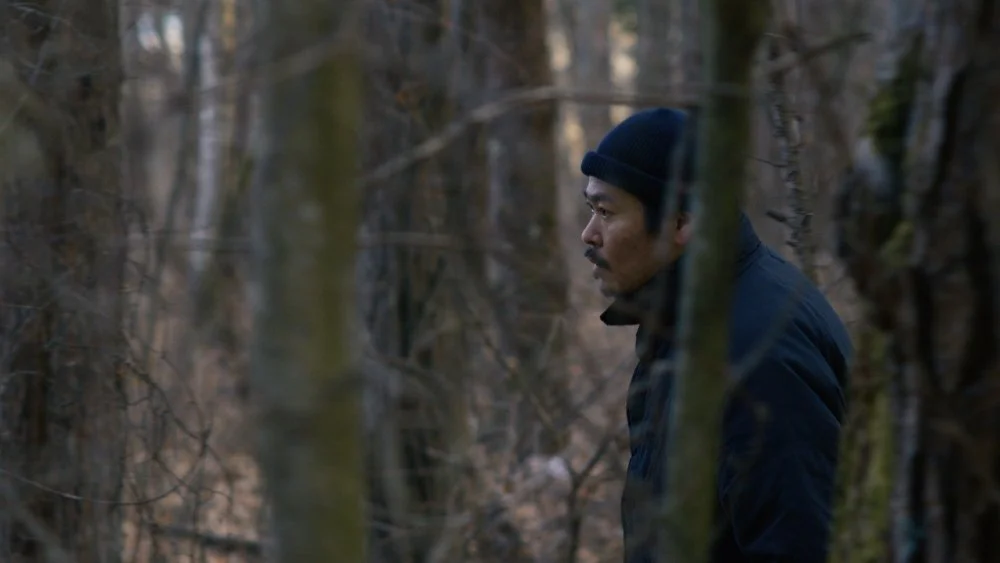
Hitoshi Omika in Evil Does Not Exist | Credit: Sideshow and Janus Films
Evil Does Not Exist is a powerful and contemplative film that gives you a ton to think about. I feel like this is one of those films that will reward multiple viewings, revealing more layers about these characters and the themes that this story explores. I cannot wait to watch this again!